
Friday, April 10, 2026
  • Contact
  • Home
  • Privacy Policy
The Coin Updates
  • Home
  • Bitcoin
  • Blockchain Technology
  • Ethereum
  • Altcoins
  • NFTs/DeFi
  • Crypto Opinion
  • More
    • Crypto Regulations
    • Trading
No Result
View All Result
The Coin Updates

Altcoin Analysis: Dogecoin (DOGE) Price Prediction and Outlook

by The Coins Updates
September 7, 2024
in Altcoins
Altcoin Analysis: Dogecoin (DOGE) Price Prediction and Outlook
0
SHARES
Share on FacebookShare on Twitter

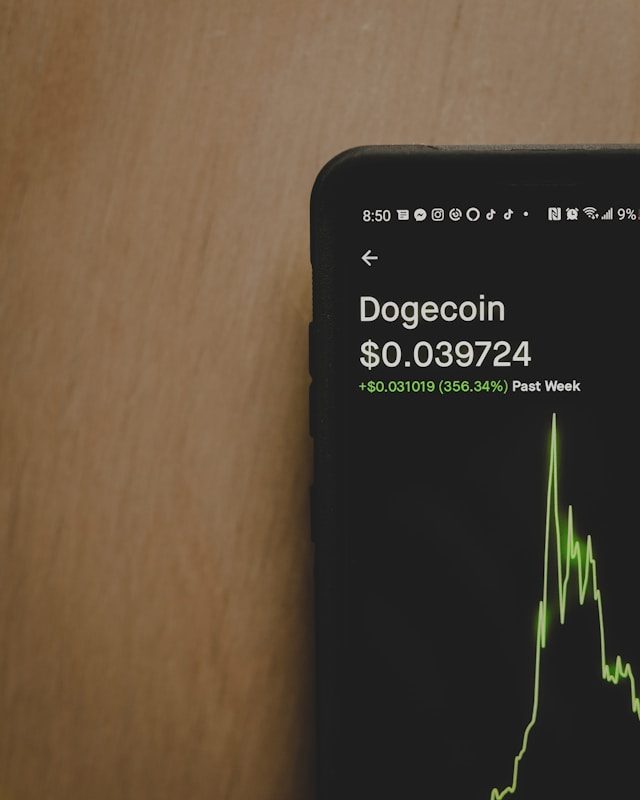
In the ever-evolving world of cryptocurrencies, few coins have captured the public imagination quite like Dogecoin (DOGE). What started as a playful meme-inspired project has grown into a digital asset with a market capitalization in the billions of dollars. This remarkable journey has left investors, analysts, and crypto enthusiasts wondering: what’s next for Dogecoin?

In this comprehensive analysis, we’ll dive deep into Dogecoin’s history, current market position, and potential future trajectories. We’ll examine the factors that could influence DOGE’s price in the coming years, analyze expert predictions, and provide a balanced outlook on this unique cryptocurrency.

Related posts

How to Identify the Next Big Altcoin Before It Goes Mainstream

How to Identify the Next Big Altcoin Before It Goes Mainstream

November 21, 2024
Why Altcoins Are Key to Solving the Blockchain Scalability Problem

Why Altcoins Are Key to Solving the Blockchain Scalability Problem

November 20, 2024

The Dogecoin Story: From Meme to Mainstream

Origins and Early Days

Dogecoin was created in 2013 by software engineers Billy Markus and Jackson Palmer. Initially conceived as a joke, the cryptocurrency featured the Shiba Inu dog from the popular “Doge” meme as its mascot. Despite its humorous origins, Dogecoin quickly gained a devoted following.

Key Milestones:

  1. December 2013: Dogecoin launched
  2. 2014: Dogecoin community raises funds for various charitable causes, including the Jamaican bobsled team’s trip to the Winter Olympics
  3. 2015-2020: Steady growth in community and adoption, albeit with relatively low price action
  4. 2021: Explosive growth in popularity and price, fueled by social media and celebrity endorsements

The 2021 Surge

Dogecoin experienced a meteoric rise in 2021, with its price increasing by thousands of percent. This surge was driven by several factors:

  1. Social Media Influence: Platforms like Reddit and Twitter played a crucial role in promoting DOGE
  2. Celebrity Endorsements: High-profile figures, most notably Elon Musk, expressed support for Dogecoin
  3. Retail Investor Interest: The accessibility and low price per coin attracted many first-time crypto investors
  4. Listing on Major Exchanges: Increased availability on popular trading platforms boosted liquidity and access

Current Market Position

As of September 2024, Dogecoin remains one of the top cryptocurrencies by market capitalization. Here’s a snapshot of its current position:

  • Market Cap: [Insert current market cap]
  • Price: [Insert current price]
  • Circulating Supply: [Insert current circulating supply]
  • 24h Trading Volume: [Insert current 24h trading volume]

Recent Developments

  1. [Insert recent development 1]
  2. [Insert recent development 2]
  3. [Insert recent development 3]

Factors Influencing Dogecoin’s Price

To make an informed prediction about Dogecoin’s future price, it’s crucial to understand the various factors that can influence its value:

1. Social Media and Celebrity Influence

Dogecoin’s price has shown significant sensitivity to social media trends and celebrity endorsements. Tweets from influential figures like Elon Musk have historically caused substantial price movements.

Outlook: While this factor has been a major driver of DOGE’s price in the past, its impact may diminish as the market matures. However, it remains a significant consideration for short-term price movements.

2. Market Sentiment and Retail Investor Interest

As a “people’s cryptocurrency,” Dogecoin’s value is heavily influenced by overall market sentiment and the interest of retail investors.

Outlook: Continued mainstream adoption of cryptocurrencies could drive more retail investors to Dogecoin, potentially increasing demand and price.

3. Technological Development and Utility

While Dogecoin started as a joke, its development team has been working on improving its technology and expanding its use cases.

Outlook: Enhancements to Dogecoin’s technology, such as improved transaction speeds or smart contract capabilities, could significantly boost its value proposition and price.

4. Regulatory Environment

The regulatory landscape for cryptocurrencies is evolving, and changes in regulations can have significant impacts on crypto prices.

Outlook: Favorable regulations could boost confidence in cryptocurrencies, including Dogecoin. Conversely, strict regulations could pose challenges.

5. Macroeconomic Factors

Broader economic conditions, including inflation rates, monetary policies, and global economic stability, can influence cryptocurrency prices.

Outlook: In times of economic uncertainty, some investors may turn to cryptocurrencies as alternative investments, potentially benefiting Dogecoin.

6. Competition in the Cryptocurrency Space

Dogecoin faces competition from thousands of other cryptocurrencies, including other meme coins and more technologically advanced projects.

Outlook: Dogecoin will need to maintain its unique appeal and potentially expand its utility to compete effectively in an increasingly crowded market.

Technical Analysis

While past performance doesn’t guarantee future results, technical analysis can provide insights into potential price movements based on historical data and chart patterns.

Key Technical Indicators

  1. Moving Averages: [Insert analysis of current moving averages]
  2. Relative Strength Index (RSI): [Insert current RSI analysis]
  3. Fibonacci Retracement Levels: [Insert analysis of key Fibonacci levels]
  4. Support and Resistance Levels: [Insert key support and resistance levels]

Chart Patterns

[Insert analysis of any significant chart patterns, such as head and shoulders, cup and handle, etc.]

Expert Predictions and Price Targets

It’s important to note that cryptocurrency price predictions, especially for volatile assets like Dogecoin, should be taken with a grain of salt. However, examining expert opinions can provide additional context for potential price movements.

Short-Term Predictions (End of 2024)

  1. Analyst/Platform 1: [Insert prediction and rationale]
  2. Analyst/Platform 2: [Insert prediction and rationale]
  3. Analyst/Platform 3: [Insert prediction and rationale]

Mid-Term Predictions (2025-2026)

  1. Analyst/Platform 1: [Insert prediction and rationale]
  2. Analyst/Platform 2: [Insert prediction and rationale]
  3. Analyst/Platform 3: [Insert prediction and rationale]

Long-Term Predictions (2027 and beyond)

  1. Analyst/Platform 1: [Insert prediction and rationale]
  2. Analyst/Platform 2: [Insert prediction and rationale]
  3. Analyst/Platform 3: [Insert prediction and rationale]

Potential Catalysts for Growth

Several factors could potentially drive Dogecoin’s price higher in the coming years:

1. Increased Merchant Adoption

As more businesses begin to accept Dogecoin as a form of payment, its utility and demand could increase.

Potential Impact: Moderate to High

2. Technological Upgrades

Improvements to Dogecoin’s blockchain, such as increased transaction speeds or enhanced security features, could make it more attractive to users and investors.

Potential Impact: High

3. Integration with Popular Platforms

Adoption by major e-commerce platforms, social media networks, or payment processors could significantly boost Dogecoin’s visibility and utility.

Potential Impact: High

4. Continued Celebrity Endorsements

While the impact may diminish over time, continued support from high-profile figures could maintain interest in Dogecoin.

Potential Impact: Moderate

5. Development of the Dogecoin Ecosystem

The creation of DeFi protocols, NFT platforms, or other applications built on or integrated with Dogecoin could expand its use cases.

Potential Impact: High

Risks and Challenges

While there are potential catalysts for growth, Dogecoin also faces several risks and challenges that could impact its price negatively:

1. Regulatory Crackdowns

Increased regulatory scrutiny of cryptocurrencies, particularly those perceived as speculative assets, could pose challenges for Dogecoin.

Potential Impact: High

2. Market Saturation

The proliferation of new cryptocurrencies and meme coins could dilute interest in Dogecoin.

Potential Impact: Moderate

3. Technological Stagnation

If Dogecoin fails to keep pace with technological advancements in the crypto space, it may lose ground to more innovative projects.

Potential Impact: High

4. Shift in Market Sentiment

A broad shift away from meme-based or “fun” cryptocurrencies towards more utility-focused projects could negatively impact Dogecoin’s popularity.

Potential Impact: Moderate to High

5. Whale Concentration

A significant portion of Dogecoin’s supply is held by a small number of addresses. Movements by these “whales” could cause substantial price volatility.

Potential Impact: High

The Road Ahead: Outlook for Dogecoin

As we look to the future of Dogecoin, it’s clear that its path forward is both exciting and uncertain. Here are some key considerations for its outlook:

1. Community Strength

Dogecoin’s passionate community has been a driving force behind its success. The continued engagement and growth of this community will be crucial for its future.

Outlook: Positive. The Dogecoin community has shown remarkable resilience and continues to attract new members.

2. Technological Development

The Dogecoin Foundation, re-established in 2021, has outlined plans for improving Dogecoin’s technology and utility.

Outlook: Cautiously optimistic. While plans for development are promising, their successful implementation and impact remain to be seen.

3. Market Position

Dogecoin has maintained its position as one of the top cryptocurrencies by market cap, even after the volatility of 2021-2022.

Outlook: Stable, with potential for growth. Dogecoin’s established market position provides a solid foundation, but competition in the crypto space is fierce.

4. Mainstream Adoption

The key to Dogecoin’s long-term success may lie in its ability to transition from a speculative asset to a widely used currency.

Outlook: Uncertain. While Dogecoin has made strides in adoption, significant challenges remain in achieving widespread, practical use.

Conclusion: The Unpredictable Journey of the Meme Coin

Predicting the future price of any cryptocurrency is a challenging task, and Dogecoin’s unique position as a meme-inspired coin that has achieved significant mainstream recognition makes this even more complex. Its price movements have often defied conventional analysis, driven by factors ranging from social media trends to broader crypto market sentiment.

While expert predictions and technical analysis can provide some guidance, it’s crucial for investors and enthusiasts to approach Dogecoin with a balanced perspective. The factors that could drive its price higher – including increased adoption, technological improvements, and its strong community – are counterbalanced by significant risks and challenges.

Dogecoin’s journey from a joke cryptocurrency to a multi-billion dollar asset has already surprised many in the financial and crypto worlds. Whether it can maintain this position, continue to grow, or eventually fade in relevance will likely depend on its ability to evolve beyond its meme origins while maintaining the unique charm that attracted its passionate community in the first place.

For potential investors, the key takeaway should be the importance of thorough research and risk management. Dogecoin, like all cryptocurrencies, remains a highly volatile and speculative investment. While it offers the potential for significant returns, it also carries the risk of substantial losses.

As we move forward, Dogecoin’s story will undoubtedly continue to be one of the most intriguing in the cryptocurrency space. Whether it ultimately succeeds in becoming a widely used digital currency, remains a popular speculative asset, or fades from prominence, its impact on the world of crypto and popular culture is already indelible.

In the end, the future of Dogecoin may very well reflect the broader evolution of the cryptocurrency market itself – unpredictable, fascinating, and full of surprises. As always in the world of crypto, the only certainty is uncertainty, and the next chapter of the Dogecoin story is yet to be written.


Previous Post

Hidden Gems: Underappreciated Altcoins with Big Upside

Next Post

Bitcoin Dominance: Is the King of Crypto Losing Its Crown?

RECOMMENDED NEWS

Why Ethereum’s Move to Proof of Stake Is a Game Changer

Why Ethereum’s Move to Proof of Stake Is a Game Changer

2 years ago
How to Spot Crypto Market Trends: A Beginner’s Guide to Trading

How to Spot Crypto Market Trends: A Beginner’s Guide to Trading

1 year ago
Non-Fungible Tokens (NFTs) have revolutionized the digital landscape, transforming art, entertainment, gaming, and even real estate. While multiple blockchains now support NFTs, Ethereum remains the most dominant player. As 2024 progresses, Ethereum is poised to maintain its leading position in the NFT space due to its technological advancements, thriving ecosystem, and continued innovations. This comprehensive analysis will explore why Ethereum will continue to dominate the NFT space in 2024, diving into key factors like scalability, developer support, institutional adoption, and how its ecosystem has become synonymous with NFTs. Table of Contents What is Ethereum? Understanding NFTs and Their Relationship with Ethereum The Role of Ethereum in NFT Development Key Factors Behind Ethereum's Dominance in the NFT Space a. First-Mover Advantage b. Smart Contract Superiority c. Ecosystem and Developer Support d. Ethereum’s EIP-1559 and Tokenomics Ethereum 2.0 and How It Will Impact NFTs a. Proof of Stake and Energy Efficiency b. Scalability Improvements with Layer 2 Solutions NFT Marketplaces on Ethereum: OpenSea, Rarible, and More Competition from Other Blockchains: Solana, Polygon, and Tezos a. Solana’s Fast and Cheap Transactions b. Polygon’s Role as an Ethereum Scaling Solution c. Tezos and Energy Efficiency Ethereum’s Network Effects in the NFT Space Institutional Adoption of Ethereum for NFTs The Role of DeFi in Ethereum’s NFT Ecosystem Security and Decentralization: Ethereum’s Strengths Challenges Facing Ethereum in 2024 a. Gas Fees and Their Impact on NFTs b. Competition from Alternative Blockchains Future of NFTs and the Metaverse: Ethereum’s Role Frequently Asked Questions (FAQs) Conclusion 1. What is Ethereum? Ethereum is a decentralized, open-source blockchain that enables smart contracts and decentralized applications (dApps). Launched in 2015, Ethereum has become the second-largest cryptocurrency by market capitalization, largely due to its versatility. Ethereum's programmable nature allows developers to create decentralized applications and NFTs, leading to the platform's dominance in various sectors, including decentralized finance (DeFi) and the burgeoning NFT market. 2. Understanding NFTs and Their Relationship with Ethereum Non-Fungible Tokens (NFTs) are unique digital assets verified on the blockchain, making them indivisible and unique. Unlike cryptocurrencies like Bitcoin or Ethereum, NFTs cannot be exchanged on a one-to-one basis as they have distinct properties. NFTs can represent anything from digital art and music to virtual real estate and gaming assets. Ethereum was the first blockchain to support NFTs, with the introduction of the ERC-721 token standard in 2017. This development opened the floodgates for the creation of NFT marketplaces, collections, and a digital economy that thrives on the Ethereum blockchain. 3. The Role of Ethereum in NFT Development Ethereum’s infrastructure plays a pivotal role in the NFT ecosystem. The ERC-721 token standard allows developers to create NFTs with customizable properties. Additionally, Ethereum’s ERC-1155 standard introduced greater efficiency by allowing multiple types of tokens (both fungible and non-fungible) to be created and managed in a single smart contract. Ethereum has been the birthplace of the most popular and high-value NFT projects like CryptoPunks, Bored Ape Yacht Club (BAYC), and Art Blocks. The innovation enabled by Ethereum’s smart contracts has made it the go-to platform for NFT creators, collectors, and marketplaces. 4. Key Factors Behind Ethereum's Dominance in the NFT Space a. First-Mover Advantage Ethereum was the first blockchain to enable NFTs, which has allowed it to cultivate a rich and expansive ecosystem over time. Early projects like CryptoKitties and CryptoPunks laid the foundation for what would become a billion-dollar NFT industry. Being the first to market, Ethereum attracted developers, artists, and collectors, leading to network effects that have proven hard to replicate on other blockchains. b. Smart Contract Superiority Ethereum's smart contracts offer a high level of customizability and security, making them ideal for creating NFTs. These contracts allow artists and developers to set royalty payments, define asset ownership, and enable future trading mechanisms, all on a decentralized platform. Ethereum’s smart contracts are seen as more robust and trusted compared to those of newer chains, making it the blockchain of choice for NFT creators and buyers. c. Ecosystem and Developer Support Ethereum has the largest and most active developer community in the blockchain space. With thousands of dApps, tools, and frameworks built on Ethereum, it offers unmatched infrastructure for NFT projects. Ethereum also boasts an expansive range of NFT marketplaces, decentralized finance (DeFi) tools, and wallet integrations, making it the most supportive blockchain for NFT creators and traders. d. Ethereum’s EIP-1559 and Tokenomics The Ethereum Improvement Proposal (EIP) 1559, implemented in August 2021, introduced a burn mechanism for a portion of the transaction fees, making Ethereum a deflationary asset over time. This shift in tokenomics has contributed to Ethereum’s growing value, which in turn, strengthens its position in the NFT market. Higher ETH value translates to more capital flow and investor confidence in the ecosystem. 5. Ethereum 2.0 and How It Will Impact NFTs Ethereum 2.0, also known as The Merge, is a series of upgrades designed to make Ethereum more scalable, secure, and sustainable. Its completion in late 2023 has set the stage for Ethereum's continued dominance in 2024. a. Proof of Stake and Energy Efficiency One of the key improvements of Ethereum 2.0 is the shift from Proof of Work (PoW) to Proof of Stake (PoS). This change has drastically reduced the network’s energy consumption, making Ethereum significantly more environmentally friendly. The criticism surrounding the environmental impact of NFTs is being mitigated as Ethereum’s carbon footprint is now over 99% lower post-merge, appealing to eco-conscious creators and collectors. b. Scalability Improvements with Layer 2 Solutions Ethereum 2.0, combined with Layer 2 solutions like Optimism, Arbitrum, and zk-Rollups, is set to solve Ethereum’s scalability issues. These solutions offload transaction computations from the main chain, reducing congestion and lowering gas fees. As these technologies mature, they will enable cheaper and faster NFT transactions, further strengthening Ethereum’s appeal. 6. NFT Marketplaces on Ethereum: OpenSea, Rarible, and More The largest and most influential NFT marketplaces are built on Ethereum. OpenSea, the leading NFT platform, facilitates billions of dollars in monthly transactions. Rarible, SuperRare, and Foundation are other notable Ethereum-based marketplaces that have garnered attention for their artist-friendly platforms, rare digital collectibles, and thriving communities. These marketplaces have become synonymous with the NFT movement, and their deep integration with Ethereum ensures the blockchain’s continued dominance. 7. Competition from Other Blockchains: Solana, Polygon, and Tezos While Ethereum remains the leader, it faces competition from other blockchains offering unique features or lower transaction costs. However, none have yet dethroned Ethereum’s position. a. Solana’s Fast and Cheap Transactions Solana has emerged as a key competitor, known for its high-speed and low-cost transactions. Solana’s Proof of History (PoH) mechanism allows the network to handle thousands of transactions per second. However, its NFT ecosystem, while growing, lacks the depth and liquidity of Ethereum’s marketplaces. b. Polygon’s Role as an Ethereum Scaling Solution Polygon (MATIC) is a Layer 2 solution for Ethereum, providing faster and cheaper transactions while maintaining compatibility with the Ethereum blockchain. Many NFT projects have migrated to Polygon to avoid Ethereum’s high gas fees while still benefiting from Ethereum’s security and infrastructure. c. Tezos and Energy Efficiency Tezos has marketed itself as a green blockchain, offering energy-efficient NFT minting at a fraction of the cost of Ethereum. While it has attracted some environmentally conscious artists, it still lacks the network effects and liquidity of Ethereum. 8. Ethereum’s Network Effects in the NFT Space One of Ethereum’s greatest strengths is its network effects. The vast array of dApps, wallets, and marketplaces built on Ethereum create a self-reinforcing loop: the more users adopt Ethereum, the more developers build on it, attracting even more users. This momentum is difficult for any other blockchain to replicate, especially in the NFT space. 9. Institutional Adoption of Ethereum for NFTs In recent years, institutional players have shown increasing interest in NFTs, particularly on Ethereum. Companies like Nike, Adidas, Christie’s, and Sotheby’s have launched NFT projects or hosted high-profile auctions on Ethereum. This institutional backing lends credibility and stability to Ethereum’s ecosystem, further entrenching its dominance. 10. The Role of DeFi in Ethereum’s NFT Ecosystem Ethereum’s thriving DeFi ecosystem plays a complementary role to its NFT space. NFT holders can now leverage DeFi tools like fractional ownership, NFT lending, and collateralization to unlock liquidity from their digital assets. The seamless integration of DeFi and NFTs on Ethereum provides users with more financial opportunities, making the platform more appealing than its competitors. 11. Security and Decentralization: Ethereum’s Strengths Security is a critical concern for any blockchain hosting high-value assets like NFTs. Ethereum is widely regarded as the most decentralized and secure blockchain in the NFT space. Its long-standing track record, extensive testing, and continued development ensure that it remains the most trusted platform for storing and trading NFTs securely. 12. Challenges Facing Ethereum in 2024 a. Gas Fees and Their Impact on NFTs Ethereum’s high gas fees have long been a pain point, especially for small NFT transactions. While Layer 2 solutions are helping alleviate this issue, the network will need continued innovation to stay competitive against cheaper alternatives like Solana or Tezos. b. Competition from Alternative Blockchains Although Ethereum is the leader, other blockchains are innovating quickly. As Solana, Polygon, and Tezos continue to develop, Ethereum will need to maintain its technological edge to keep its dominant position in the NFT market. 13. Future of NFTs and the Metaverse: Ethereum’s Role The Metaverse—a shared virtual space where digital and physical realities converge—is increasingly becoming a focal point of NFTs. Ethereum-based projects like Decentraland and The Sandbox are pioneering virtual worlds where NFTs represent ownership of virtual land, avatars, and other in-game assets. Ethereum’s dominance in NFTs positions it as the leading blockchain in the future Metaverse economy. 14. Frequently Asked Questions (FAQs) Q1: Why is Ethereum the leading blockchain for NFTs? Ethereum was the first blockchain to support NFTs, and its smart contracts, extensive developer support, and robust ecosystem make it the preferred platform for NFT projects. Q2: Will Ethereum’s gas fees drop in 2024? Yes, with the continued adoption of Ethereum 2.0 and Layer 2 solutions like Optimism and Arbitrum, gas fees are expected to decrease significantly in 2024. Q3: Can NFTs exist on blockchains other than Ethereum? Yes, NFTs can be created on other blockchains like Solana, Polygon, and Tezos. However, Ethereum remains the dominant platform due to its security, network effects, and developer ecosystem. Q4: How does Ethereum 2.0 impact NFTs? Ethereum 2.0 improves the network’s scalability and energy efficiency, making it more sustainable and cost-effective for NFT transactions. Q5: Is Solana a better blockchain for NFTs than Ethereum? Solana offers faster and cheaper transactions, but it lacks Ethereum’s depth of ecosystem, liquidity, and developer support, making Ethereum the preferred choice for high-value NFTs. Q6: Can I use DeFi with my Ethereum NFTs? Yes, Ethereum’s integration with DeFi allows NFT holders to participate in lending, borrowing, and fractional ownership, unlocking more financial value from their digital assets. 15. Conclusion Ethereum’s leadership in the NFT space is built on its first-mover advantage, superior smart contracts, and extensive ecosystem. With the completion of Ethereum 2.0, the blockchain is set to address scalability and environmental concerns, making it more attractive to creators, collectors, and institutional investors. While competition from Solana, Tezos, and other blockchains will continue, Ethereum’s unmatched developer support, security, and network effects will ensure it remains the dominant platform for NFTs in 2024 and beyond.

Why Ethereum Will Continue to Dominate the NFT Space in 2024

2 years ago
Top Blockchain Networks for Smart Contracts in 2024

Top Blockchain Networks for Smart Contracts in 2024

1 year ago

FOLLOW US

BROWSE BY CATEGORIES

  • Altcoins
  • Bitcoin
  • Blockchain Technology
  • Crypto Opinion
  • Crypto Regulations
  • Ethereum
  • NFTs/DeFi
  • Press Release
  • Trading
  • Uncategorized

POPULAR NEWS

  • edna foster cryptopronetwork

    Unlocking the Power of Decentralization: An In-Depth Look at Edna Foster CryptoProNetwork

    0 shares
    Share 0 Tweet 0
  • SaltApp Leads the Revolution of Decentralized Trading in Dubai

    0 shares
    Share 0 Tweet 0
  • How to Maximize Your Bitcoin Earnings Through Staking and Lending

    0 shares
    Share 0 Tweet 0
  • The Most Promising Altcoins in the Gaming and Metaverse Space

    0 shares
    Share 0 Tweet 0
  • How to Trade NFTs for Profit: A Comprehensive Guide

    0 shares
    Share 0 Tweet 0
The Coin Updates

Stay updated with the latest cryptocurrency news, insights, and trends to make informed decisions in the fast-paced world of digital assets.

Follow us on social media:

Recent News

  • Ethereum Rewards Without the Rollercoaster – The JAMining Model of Predictable Crypto Income
  • Crypto Marketing Strategies for New York: Navigating the Empire State’s Digital Asset Landscape
  • Gold Depot Sets a New Benchmark in Wealth Growth with Automated Gold Arbitrage Trading

Category

  • Altcoins
  • Bitcoin
  • Blockchain Technology
  • Crypto Opinion
  • Crypto Regulations
  • Ethereum
  • NFTs/DeFi
  • Press Release
  • Trading
  • Uncategorized

Recent News

Ethereum Rewards Without the Rollercoaster – The JAMining Model of Predictable Crypto Income

August 1, 2025

Crypto Marketing Strategies for New York: Navigating the Empire State’s Digital Asset Landscape

July 19, 2025
  • Home
  • Privacy Policy
  • Contact

All Rights Reserved - TheCoinUpdates © 2024

No Result
View All Result
  • Home
  • Trading
  • Blockchain Technology
  • Bitcoin
  • Ethereum
  • NFTs/DeFi
  • Crypto Regulations
  • Altcoins
  • Crypto Opinion

All Rights Reserved - TheCoinUpdates © 2024